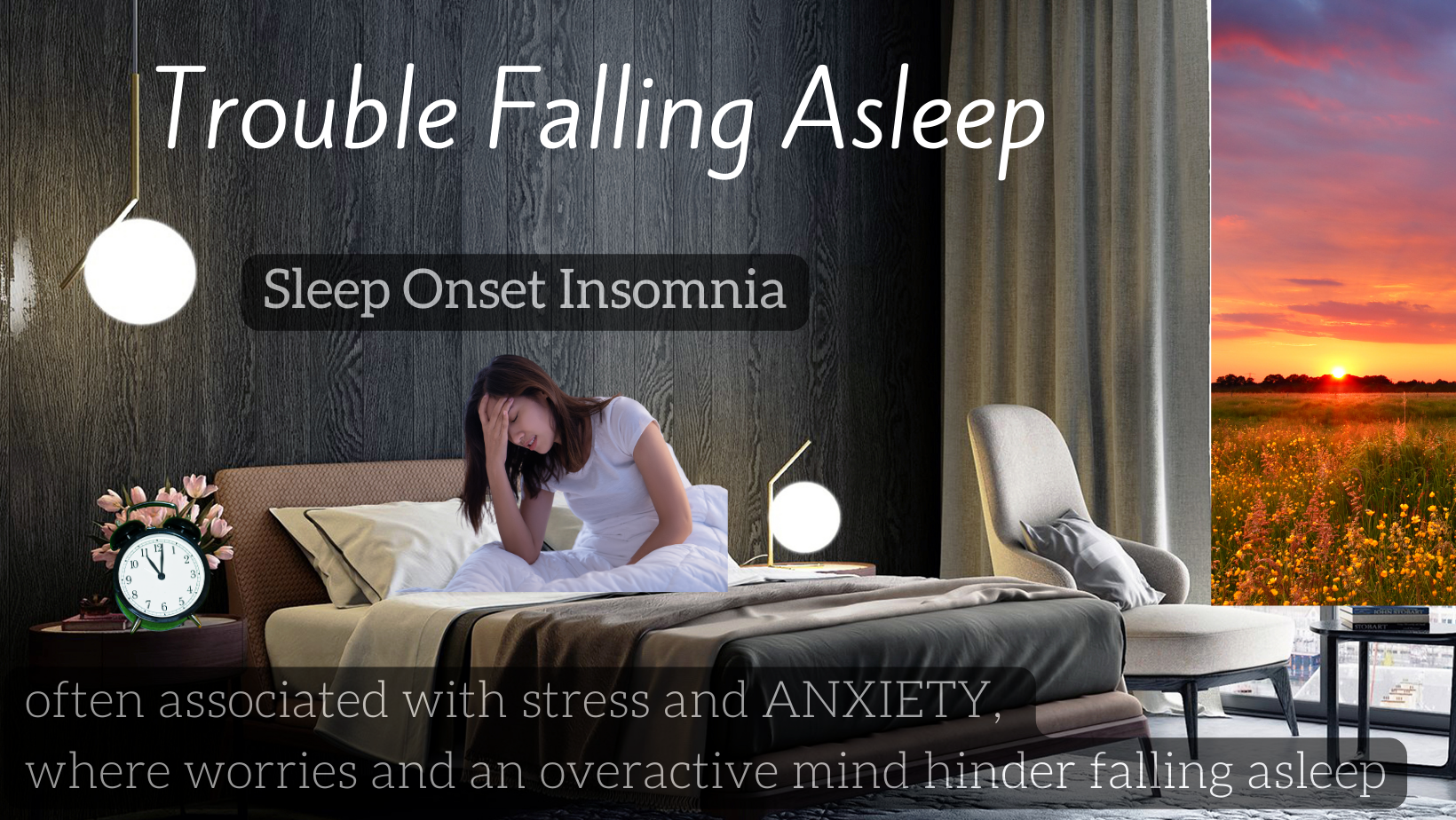
Sleep-onset insomnia occurs when people have difficulty falling asleep, even when they are tired.
Sleep maintenance insomnia refers to difficulty staying asleep during the night.
Mixed insomnia is a hybrid condition characterized by sleep-onset and sleep maintenance insomnia symptoms.
SLEEP ONSET INSOMNIA
Initial onset insomnia tends to be anxiety related.
Insomnia is a common sleep disorder that can make it hard to ÿall asleep, hard to stay asleep,
or cause you to wake up too early and not be able to Āet back to sleep. You may still feel tired
when you wake up. Insomnia can sap not only your energy level and mood but also your health,
work performance and quality of life.
Sleep-Onset Insomnia (Initial Insomnia): This type involves difficulty falling asleep at the beginning of the night. It's often associated with stress and anxiety, where worries and an overactive mind hinder the ability to initiate sleep
SLEEP MAINTENANCE - MIDDLE INSOMNIA
Sleep Maintenance or Middle insomnia is usually medical.
Sleep Maintenance Insomnia (Middle Insomnia): Characterized by difficulty staying asleep, leading to frequent awakenings during the night. This form can be related to medical conditions such as sleep apnea, restless legs syndrome, or other health issues that disrupt sleep continuity.
LATE OR TERMINAL INSOMNIA
Late or terminal insomnia is depression related.
Terminal insomnia — also called “late insomnia” — is what you have when you can fall asleep
easily soon after you go to bed... but then wake up too early in the morning. For some reason
your brain thinks “sleep time” is over, but you’ve only had three to five hours or less. And you
can’t go back to sleep no matter what you do.
Late Insomnia (Terminal Insomnia): Involves waking up too early in the morning and being unable to return to sleep. This pattern is often linked to depression, particularly melancholic depression, where early morning awakenings are a common symptom.
HYPERSOMNIA / EXCESSIVE DAYTIME SLEEPINESS
Difficulty waking up easily in the morning can be referred to by several terms, depending on the underlying causes or specific symptoms:
Sleep Inertia: This is a state of grogginess and impaired alertness upon waking. It’s normal to experience some sleep inertia, but if it’s severe or prolonged, it may interfere with morning functioning.
Delayed Sleep-Wake Phase Disorder (DSWPD): A circadian rhythm disorder where your natural sleep-wake cycle is delayed, making it difficult to fall asleep and wake up at conventional times.
Hypersomnia: A condition characterized by excessive sleepiness during the day, despite adequate or extended nighttime sleep. It can include difficulty waking up in the morning.
Dysania: An informal term (not a medical diagnosis) often used to describe a chronic inability to get out of bed in the morning.
Sleep Apnea: A sleep disorder where breathing repeatedly stops and starts during sleep, leading to poor-quality rest and difficulty waking up.
Non-Restorative Sleep: If your sleep doesn’t feel refreshing, it could be due to underlying issues like insomnia, restless legs syndrome, or other sleep disorders, making it harder to wake up.
"Insomnia
People who have insomnia don't feel as if they get enough sleep at night. They may have trouble falling asleep or may wake up frequently during the night or early in the morning. Insomnia is a problem if it affects your daytime activities. Insomnia has many possible causes, including stress, anxiety, depression, poor sleep habits, circadian rhythm disorders (such as jet lag), and taking certain medications.
Snoring
Many adults snore. The noise is produced when the air you inhale rattles over the relaxed tissues of the throat. Snoring can be a problem simply because of the noise it causes. It may also be a marker of a more serious sleep problem called sleep apnea.
Sleep Apnea
Sleep apnea occurs when the upper airway becomes completely or partially blocked, interrupting regular breathing for short periods of time -- which then wakes you up. It can cause severe daytime sleepiness. If left untreated, severe sleep apnea may be associated with high blood pressure and the risk of stroke and heart attack.
Pregnancy and Sleep
Women often experience sleepless nights and daytime fatigue in the first and third trimesters of their pregnancy. During the first trimester, frequent trips to the bathroom and morning sickness may disrupt sleep. Later in pregnancy, vivid dreams and physical discomfort may prevent deep sleep. After delivery, the new baby's care or the mother's postpartum depression may interrupt sleep.
Narcolepsy
Narcolepsy is a brain disorder that causes excessive daytime sleepiness. There is sometimes a genetic component, but most patients have no family history of the problem. Though dramatic and uncontrolled "sleep attacks" have been the best-known feature of narcolepsy, in reality many patients do not have sleep attacks. Instead, they experience constant sleepiness during the day.
Restless Legs Syndrome
In people who have restless legs syndrome, discomfort in the legs and feet peaks during the evening and night. They feel an urge to move their legs and feet to get temporary relief, often with excessive, rhythmic, or cyclic leg movements during sleep. This can delay sleep onset and cause brief awakening during sleep. Restless legs syndrome is a common problem among middle-aged and older adults."
Sleep Disorders & Problems: 10 Types and Causes of Each
%20(1).jpg)


.png)


.%20The%20scene%20features%20a%20person%20lying%20peacefully%20in%20bed,.webp)


.png)
.png)


.png)
.png)


.png)





.png)




.png)


